Thursday, February 27, 2014

A successful year for Sandler AG | 600 staff members, two new investments, one new sales record


Bavarian nonwovens producer Sandler AG again reports record sales: In 2013, the company generated a sales volume of 274 million Euros, manufacturing approximately 100,000 tonnes of nonwovens. This sales figure corresponds to a 10 percent year-on-year increase—a result better than expected, even to the company management. The Sandler team also grew in 2013: a staff of 600 now works in Schwarzenbach. Sandler achieved very good results in all market segments from nonwovens for hygiene applications and wipes substrates for care and cleaning to technical applications in the automobile, in industrial and household uses, in construction and technical insulation, through to nonwovens for home textiles and office acoustics. The first months of 2013 were characterized by an upward trend involving a high level of capacity utilization. During the second half of the year this trend gained further momentum.

The hygiene, wipes and automotive segments were major contributors to Sandler’s success last year. Long-term development projects were successfully implemented and established on the market.

Nonwovens for distribution layers quickly transport the fluid to the absorbent core and distribute it evenly. The soft surface remains dry, providing for high wearing comfort. Elastic nonwovens in closure systems such as diaper ears create room to move. These textile materials are extensible even at low force. They adapt to the shape of the body, facilitating a perfect fit of the diaper without wearing out. Sandler supplies these innovations and a product range comprising more than 1,000 nonwoven qualities for diverse areas of application to renowned producers worldwide. Sandler nonwovens form the base material for numerous popular brands available in our supermarkets.

Nonwovens have become veritable high-tech products, frequently developed in conjunction with customers and suppliers. Likewise, cooperations with universities and research institutes in fundamental R&D are gaining importance. These partnerships provide the basis for the implementation of properties such as fluid storage and transport or of energy savings during use of the nonwoven.

To also provide sustainable materials the conservation of resources and an efficient energy management are essential. Thus, continuous investment in machinery and processes has always been an integral part of Sandler’s philosophy.

Source: Sandler

Picanol Group Closes 2013 with a Record Breaking Performance


In line with earlier forecasts, the Picanol Group (NYSE Euronext: PIC) realized a consolidated turnover of 559.98 million in 2013, representing an increase of 21% compared to revenues of 2012.

The Weaving Machines division experienced a record breaking year in 2013. Picanol had a strong start to 2013 based on the well-filled order book at the end of 2012. The high global demand for Picanol weaving machines in the first half of the year resulted in the production of a record number of weaving machines, whereby increased attention was paid to handling the various production peaks. The second half of the year was characterized by an increasing pressure on volumes and margins, partly due to the strong euro and the slowdown in major textile markets.

The Industries division was able to continue the positive trend of recent years in the second half of 2013, by successfully focusing on its engineered casting solutions (Proferro) and controller competences (PsiControl).

The Picanol Group closed the year 2013 with a net profit of 73.17 million euros, compared to 55.30 million euros in 2012. The Board of Directors will propose to the General Meeting on 16 April 2014 not to pay out a dividend.

The construction of a new test area and new training centre for weaving machines in Ypres remains on schedule. According to the planning, construction in Ypres should be completed by the summer of 2014.

The Picanol Group expects a significant slowdown in the global weaving machine market for 2014. For the first half of 2014 the Picanol Group expects to realize a turnover below that of 2013, more in line with the first half of 2012.

Source: Picanol Group

Wednesday, February 26, 2014

TFP Nonwovens in Space


Technical Fibre Products Ltd today announced that their nonwovens are present on the recently launched European Space Agency (ESA) satellite GAIA.

Technical Fibre Products (TFP) has supplied the material through RUAG Space GmbH, a leading provider of thermal insulation to the space industry. TFP's nonwoven can be found in the satellites solar shield, as a constituent in the multi-layer insulation that is primarily used in thermal management.

The satellite, GAIA, was successfully launched in December 2013 and has now entered its operational orbit where it aims to make the largest, most precise three-dimensional map of our Galaxy by surveying an unprecedented 1% of its population of 100 billion stars.

The material used on GAIA is just one of a broad range of nonwovens developed and manufactured by TFP. This range encompasses carbon, aramid, glass, thermoplastic and metal coated nonwovens as well as those made from more speciality fibres such as quartz, silicon carbide and pure metals. This diversity of fibre type and associated properties enables TFP's nonwovens to be used in a wide variety of applications. These include; delivering a high quality & functional surface finish in composites, providing high temperature thermal insulation & passive fire protection, as well as offering solutions for cryogenic storage & power generation.

Source: TFP

Technical Fibre Products (TFP) adds lamination to nonwovens business


Technical Fibre Products (TFP) has extended its manufacturing capability to include lamination as a complement to the company’s established nonwovens business.

A new flat-bed laminator with powder scatter capability has now been fully commissioned and provides the means to add value to TFP’s Optiveil™ & Optimat® nonwovens for composites, Tecnofire® passive fire protection and thermal insulation materials. The value can take several forms – bonding of multi-layer structures, powder addition and compression.

The new capability is said to provide greater flexibility in material design, enabling the production of hybrid materials made up from layers of material with different properties.

Examples include stabilisation of reinforcement fabrics with lightweight nonwovens, addition of pressure sensitive adhesive or foil backing and creation of multi-functional materials with alternating conductive and dielectric layers.

These hybrid materials can help simplify part fabrication or eliminate downstream processing steps as well as providing additional functionality, according to the company.

A further benefit to this new technology, TFP reports, is the capability to surface coat materials through powder scatter application of polymeric or active powders, such as thermoplastics or adhesive.

Coating of materials is not limited to nonwovens and can add surface functionality to the material processed. The laminator is also said to enable TFP to offer material compression, enhancing the drape of nonwovens to facilitate improved conformability to complex mould shapes used in composite manufacture, particularly when using thermoplastic veils.

The company believes these additional capabilities provide an ideal complement to the value added options TFP already offers, including flexibility in material supply in the form of rolls and sheets or custom cut shapes to suit customer requirements.

Source: TFP

Monday, February 24, 2014

High-quality circular knitted fabric simulation


Flat knitting machine manufacturer Shima Seiki’s SDS-ONE APEX3 apparel workstation can now be used to design circular knit fabric patterns including stripes and jacquard patterns. It can also produce a variety of structure patterns for single-knit fabrics such as jersey and tuck patterns, as well as double-knit fabrics such as rib fabrics. Raised nap fabrics and prints can also be simulated.

SDS-ONE APEX3 offers comprehensive support for everything from product planning, pattern development, colour ways and fabric simulation to output of circular knit CAD bitmap data and generation of sales promotion material.


It is an optimal design system for all types of knit fabrics and related products for the apparel industry, including textile converters, circular knit manufacturers, planning companies, OEM and ODM manufacturers, trade firms, yarn traders, interior designers, sporting goods manufacturers, innerwear manufacturers and sundry goods manufacturers.

Creating Patterns

Jacquard patterns and basic structure patterns such as pique and rib are stored in a database. Original patterns can be drawn using the preview screen. Repeated patterns can be converted into pixelated images with consideration given to knitting gauge.


Special Stripe Function

Stripe patterns can be designed by inputting stripe width in millimetres or inches, or by simply drawing a straight line. Taking into account the number of yarn feeder, it is possible to confirm the yarn colour allocated to each feeder as well the size of the entire pattern.


Colourways

Colour evaluation can be performed with colours selected from the colour menu or the Pantone colour guide. Colours can also be directly input through the spectrophotometer. Auto Colorway function creates colour ways by sampling colours randomly from a given image such as conceptual story boards, magazine pages and beautiful scenery photos. It enables you to easily create colour way variations according to design theme and concept.


Yarn Input

Actual yarn can be scanned in to the yarn database for use in realistic simulations which are difficult to tell apart from the actual fabric. Twist yarn, space-dyed yarn and melange yarn can be created as well.


Simulation

Structure pattern and jacquard patterns can be simulated realistically using input yarn to reduce costly sample making. The reverse side of fabrics can be simulated as well.


Simulated or scanned fabric can be draped onto photos or illustrations of garments for checking the final product image. By inputting garment size, the fabric size is automatically adjusted for accurate evaluation.

Compatibility with Circular Knitting CAD

Pattern/structure data can be exchanged between SDSR-ONE APEX and circular knitting CAD using Bitmap data.

Shima Seiki has ISO9001 certification for Design and Manufacturing of Design Systems.


Source: Shima Seiki

Eurojersey launches stylish Tube Dress concept


Italian knitted fabrics producer Eurojersey is launching the Tube Dress, the main characteristics of which are the company’s Sensitive Sculpt fabric performance, at the Première Vision trade fair that takes place in Paris from 18-20 February.

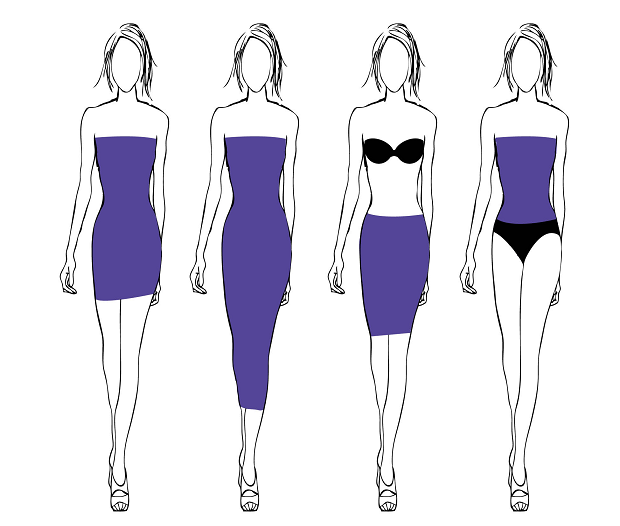
The Tube Dress is the first pocket dress, convertible according to the wearer’s needs, always handy to dress fittingly, stylish and practical in every situation, even the most unexpected, the company reports.

It turns quickly into a top, dress or longuette, sporty or seductive mini skirt, providing many looks for different occasions, yet taking up minimal space.

The heart of the new TubeDress concept is the Sensitive Sculpt performance, that is said to be particularly clingy and shaping, sculpting the silhouette, giving an attractive and well defined look.

The fabrics are said to provide qualities such as superior comfort, breathability, no pilling and extraordinarily easy care and easy wear.

These features are said to allow the creation of elegant but practical clothing that would be wrinkle free, easy to wash and ironing free, making it ideal for travelling. Rolled in packaging which is easy to carry, it is said to show off maximum elegance in minimum space.

Source: Euro Jersey

Friday, February 21, 2014

Are you ready for 4D knitting? Exploring new dimensions in advanced textiles


Just months after re-launching its advanced textiles engineering lab, Fabdesigns Inc. took delivery of one of the first new technology Stoll ADF3 machines in the U.S. In the last year, the flow of both domestic and international clients to its’ private textile laboratory has grown substantially, the company reports.

The company has been engineering complex textiles since 1988, and currently develops confidential intellectual property in the USA for prominent international clients in outdoor sports, medical, aerospace, home furnishings, entertainment, and footwear.

“Companies are requesting development and proof of concepts in wearable technology, interactive textiles, and fully integrated materials. We are exploring new aesthetics and at the same time solving their practical matters of function. They are leaders in their own respective industries and demand cutting edge technology, but are also at the same time very conscious of waste and sustainability. We needed to take them to the next level,” says Connie Huffa, company president and textile engineer.

Complimenting her fellow director Bruce Huffa, Connie said: “Bruce has set the bar extremely high in pushing these machines of past generations to do things no one expects. And, although there is still plenty that the other machines have not tapped yet, innovation drives these markets. It was time to embrace new challenges.”

In their quest for driving innovation in textiles for their clients, Fabdesigns, Inc. now has what they and many consider the latest in state-of-the-art knit equipment available, the Stoll ADF3. They say they have already been engineering and prototyping some of the most advance integrated textiles they’ve ever done using: conductive fibres, vertical and horizontal inlay combinations, advanced spacer technology, integrated wiring, digitally distributed UHMWPE (ultra high modulus yarns) for protective gear, and much more.

Access to the lab is by appointment basis and restricted for clients that need to be there, the company stresses.

“With the direct yarn feed, we can now more easily embed components, integrate sensors, and create suspension supports. The vertical inlays are just the beginning of the world this machine opens to us, our clients, and eventually the world of consumers.

Not everything needs to be yarns on this machine technology. It allows us to get creative with what we have. This is truly creating smart textiles,” Bruce Huffa, owner and executive engineer, says, threading up yarn through feeder tubes; a complex network he’s already busy modifying for performance materials on this machine.

“Simply put, this machine gives us vertical, horizontal, thickness, and diagonal controls of fabrics. The industry has just started to embrace 3D knitting, but this machine gives us many more dimensions. The new yarn distribution systems allow the ability to digitally control tensions on every row, and we’re working on controlling every needle. It’s still early, but this will be incredible technology for medical compression products and our aerospace clients who use interesting fibres. Imagine digitally controlling compression for diabetics, and functional healing of wound care.”

“Flat knitting to shape, gives production facility the ultimate control of it’s’ resources. We’ve already heard from our clients that by eliminating cutting, reducing materials used, minimizing waste and a lot of the sewing, the factories have little place for hiding costs,” Connie adds.

“Optimizing efficiency with our specialized technology creates products that make both an environmental and social difference. We always try to use as little of the planets resources, regardless of who the client is or where they manufacture. We feel that with the ability to make so many things, comes an even greater responsibility to make them responsibly.”

Source: Knitting Industry

New Textile Developments for the Sports and Apparel Sectors from Karl Mayer


KARL MAYER not only supplies state-of-the-art machines but also provides innovative ideas for designing textile products. A selection of new warp-knitted fabrics and models was therefore developed in time for the company’s open-house event, which aimed to give new impetus to the clothing and sportswear sectors. These new textile innovations include a completely new type of plissé fabric, a lace decorated with sports motifs, and a super-lightweight laminate for use in functional outdoor jackets, for example.

A new type of plissé fabric

This fabric has a design similar to a pressed pattern on the reverse side and has a clearly defined plissé construction on the right side. The clearly defined folded construction is arranged in differently coloured, narrow strips. The pronounced three-dimensional look of the fabric matches the current trend for the renaissance of the traditional, handcrafted look – which makes it look as if it had been made by hand – yet the bold, multicoloured pattern in the pop art style gives it a modern twist.

The plissé pattern features an alternating, segmented, folded construction in the white areas, thus producing an effect that enhances the dynamic look of the surface.

Lace with sporty styling

KARL MAYER has developed a lace with a sporty look which, instead of the conventional patterns featuring flowers and decorative effects normally used in lingerie, bridges the gap between two different style worlds. On the one hand, it brings a decorative, stylish look to rather austere sportswear and, on the other hand, it brings stringency and dynamics to the rather romantic, dainty look of bras and briefs. This lace is therefore completely in keeping with the current trend for blurring the boundaries between the different types of clothing.

Laminate for lightweight outdoor jackets

Lightness and function are the latest buzzwords in the clothing sector. Two new developments illustrate the contribution that warp knitting is making to the theme of wind- and weather-proof outdoor jackets made from two-layer laminates. A warp-knitted textile was used as the carrier substrate and combined with a film membrane to produce this composite. Their special characteristics have made warp-knitted textiles firm favourites for use as stabilising and protective layers for functional membranes in sportswear. With their relatively open, lightweight constructions, these specifically engineered knitted fabrics provide excellent slip resistance – one of their advantages compared to woven fabrics, which can usually only achieve this effect by having high warp and weft densities, which makes the substrates very heavy. The elongation of the warp-knitted fabrics can also be set optimally. Compared to weft-knitted fabrics worked in the appropriate lapping and materials, the elasticity is low enough to prevent the film from tearing, yet high enough for the garment to feel comfortable when worn.

Source: Textile Updates & KARL MAYER

“Organotex” Now to be Produced in the Asian Market


The majority of water-repellent functional textiles produced today contain harmful chemicals, such as fluorocarbons. One such example is PFOA, a chemical that disrupts hormones and that is essentially non-biodegradable. As an alternative, the cleantech company OrganoClick and the textile manufacturer Chang-Ho Fibre have entered a collaboration to provide fluorocarbon-free water-repellent functional fabrics on the Asian textile market for global clothing brands.

Stockholm – 27 January 2014 – OrganoClick, the Swedish cleantech company that develops and produces performance materials using environmentally friendly chemistry, today announced that the company has entered into collaboration with the Taiwanese textile manufacturer Chang-Ho Fibre. This collaboration accords OrganoClick a unique position in the World-leading Asiatic textile market as a supplier of a water-repellent fabric treatment that is readily biodegradable and is entirely fluorocarbon-free.

“In principle all textile production takes place in Asia, so it has been extremely important for us to find the right collaborative partner there. Chang-Ho Fibre is the perfect launch partner for the OrganoTex®-treatment, as the company’s innovative position and drive to constantly develop new fabrics and more environmentally friendly processes dovetails perfectly with our vision,” says Robin Grankvist, business area manager at OrganoClick AB.

OrganoClick’s innovation OrganoTex® is a water-repellent fabric treatment that utilises only biodegradable components and contains no fluorocarbons. All OrganoTex®-treated fabrics undergo analysis for fluorocarbons to identify any impurities originating from other processes, so that these can be minimised. The knowledge that the fabric is free from fluorocarbons can therefore be confidently communicated to the consumer. Since the beginning of the year the treatment has been used in production by the Taiwanese textile manufacturer Chang-Ho Fibre to produce more than a dozen water-repellent fabrics.

The first OrganoTex®-treated fabric to be launched by Chang-Ho Fibre is a 100% recycled polyester fabric. The fabric has been manufactured from one and the same fibre fraction – green PET bottles collected by volunteers at one of Asia’s largest charity organisations. The fabric retains the green colour from the bottles and therefore does not need to be re-dyed, which saves enormous amounts of water and energy, one of the most important factors in textile production today. The recycled polyester fabric has been selected as one of the most exciting textile breakthroughs at the World’s largest sports trade fair, the ISPO 2014 in Munich.

“Selecting OrganoTex® as a fluorocarbon-free water-repellent textile treatment was an obvious choice for us, as this technology is biodegradable and is not harmful, in accordance with the European REACH regulations. These reasons, together with the unique recycling process, mean that the recycled polyester fabric is perhaps the World’s greenest functional fabric – literally,” says Mark Chen, business manager at Chang-Ho Fibre, referring to the fact that the fabric is the same colour as the PET bottles from which it is made.

OrganoClick has a booth at the ISPO trade fair, 26 – 29 January 2014 in hall A6, booth number 223. The recycled polyester fabric and a number of other fabrics that have been treated with OrganoTex® by Chang-Ho Fibre will be on display there. During the coming year Chang-Ho Fibre will increase their collection of OrganoTex®-treated fabrics to also include waterproof fabrics for jackets, shoes and bags. The fabrics will be marketed by OrganoClick and Chang-Ho Fibre jointly for the consumer-focused clothing and footwear markets in Europe, the USA and Asia.

Source: Organotex

Thursday, February 20, 2014

16th Annual Americas Polyester Industry Conference to be Held from Feb 26


PCI will be holding it’s 16th annual Americas Polyester Industry Conference on Wednesday 26-Thursday 27 February 2014, at the Houston Airport Marriott Hotel at George Bush Intercontinental, Houston, Texas.

Over the last several years the Americas region’s polyester and intermediates markets have undergone significant structural changes including mergers, capacity rationalizations plus slowing growth in some sectors and faster growth in other sectors. Yet, as we look forward to the short-term horizon there are emerging issues which could have an even more dramatic affect on the region’s polyester and intermediates raw material sectors.

The US is on the verge of a period of cheap energy costs with subsequent impacts on industry feedstock and operating costs. Rising labor cost in low wage countries such as China, plus the economic benefits to source closer to home, is resulting in “re-shoring”. Excessive capital expansions in many regions could lead to changing trade patterns. Finally, the growing emphasis on sustainability could play an important role in changing industry dynamics.

The 2014 conference will discuss these issues, as well as all the latest developments specific to the regional polyester and intermediates markets. The conference will start on Wednesday, February 26 with a complimentary Polyester Chain Seminar (details below) followed by cocktails, dinner and 2 presentations. An all day session will follow on Thursday, February 27.

Against a background of an ever-changing market, we hope that the conference will provide delegates with a valuable forum to discuss the latest analysis with PCI’s seasoned consulting team, as well as guest speakers, and provide an opportunity to understand wider polyester industry issues with colleagues from across the Americas.

Source: Textile Updates

South Africa’s textile and clothing industry has benefited the least from growth in the clothing retail sector


Retail demand for clothing in South Africa has expanded significantly since the world recession, according to a new report from the global business information company Textiles Intelligence – Prospects for the Textile and Clothing Industry in South Africa. But the main beneficiaries have been foreign suppliers rather than the industry in South Africa itself.

The retail sector in South Africa has expanded as a result of an improvement in the distribution of goods and the development of suburban shopping centres, and a stimulation of consumer demand stemming from low interest rates, real wage increases, increases in government subsidies and low inflation.

Much of the required impetus to growth in the retail sector has come from an increase in disposable income and growing affluence among South Africa’s black majority -- particularly the emerging black middle class and “buppies”, or black up-and-coming professionals.

However, the main beneficiaries of the expansion in retail demand have been foreign suppliers located mainly in Asia and other countries in Sub-Saharan Africa.

In fact, South African clothing imports increased by 53.5% between 2008/09 and 2012/13, from R8,079 million to R12,399 million (US$1,457 million).

China, Mauritius and Madagascar were the sources of 99.8% of the growth of imports into South Africa in absolute terms over the four-year period. Imports from China grew by 59.0%, imports from Mauritius soared by 188.9% and imports from Madagascar surged by a staggering 644.7%.

South Africa’s domestic clothing industry, on the other hand, has consolidated substantially in recent years as factories have been closed and workers have lost their jobs. At the same time, a number of the larger manufacturers have sought to preserve their market shares by forging financial links or strategic alliances with the major South African retailers.

But in spite of declines in the numbers of clothing factories and employees, output by the clothing industry reached its highest level for at least ten years in 2012, reflecting a sharp rise in labour productivity.

The South African government has recognised that the textile and clothing industry has the potential to become a significant employer within the country’s manufacturing sector. Consequently, the government is pursuing policies to stop the decline of the industry and facilitate its growth.

To this end, it has supported the development of textile and clothing industry clusters -- by helping with investment in infrastructure and implementation of best practice. Also, it provides incentives through the Competitiveness Improvement Programme (CIP) and the Production Incentive Programme (PIP).

Furthermore, there is potential for the development of quick response and fast fashion models in the South African clothing industry, and the country’s strong retailing sector provides a platform for exporting to other African countries.

Source: Innovation of Textiles

Suominen launches value-adding Novolino™ nonwoven for tabletop products


Suominen, a global supplier of nonwovens and flexible packaging, has launched a new range of nonwoven materials for use in tabletop applications in the hotel, restaurant and catering (HoReCa) markets globally.

Suominen, a global supplier of nonwovens and flexible packaging, has launched a new range of nonwoven materials for use in tabletop applications in the hotel, restaurant and catering (HoReCa) markets globally.

Suominen supplies its industrial and retail customers with nonwovens and flexible packaging for use in consumer products worldwide. Suominen is the global market leader in nonwovens for wipes. The company employs more than 1,000 people in Europe and in the United States. Suominen’s net sales in 2013 amounted to MEUR 433.1 and operating profit excluding non-recurring items was MEUR 18.3 (continuing operations). The Suominen share (SUY1V) is listed in NASDAQ OMX Helsinki Stock Exchange.

Source: Suominen

Tuesday, February 11, 2014

Pantone Fashion Color Report for Fall 2014


Whether it was a particular decade or a trip to a special place, designers are fascinated with the beauty of the past and the spirit of the present—recreating it with color, fabric and style this fall season. Design and color were inspired by everything from books, artisan crafts, photography and retro architecture, to exotic landscapes and the children of rock legends. The diverse color palette takes us on an adventure spanning 100 years—a season roused by various vantage points from past and present.

“This is a season of untypical colors—more reflective of the imagination and ingenuity, which makes for an artful collection of colors and combinations not bound by the usual hues for fall,” said Leatrice Eiseman, executive director of the Pantone Color Institute®. "There is a feminine mystique that is reflected throughout the palette, inspired by the increasing need for women everywhere to create an individual imprint."

The top colors for women’s fashion for fall 2014 are: Radiant Orchid, Sangria, Bright Cobalt, Cypress, Royal Blue, Aurora Red, Aluminum, Mauve Mist, Cognac and Misted Yellow.

The top colors for men’s fashion for fall 2014 are: Sea Fog, Bright Cobalt, Aluminum, Cypress, Sangria, Royal Blue, Radiant Orchid, Aurora Red, Cognac and Misted Yellow.

Women’s color palette

Whether it was a particular decade or a trip to a special place, designers are fascinated with the beauty of the past and the spirit of the present – recreating it with color, fabric and style this fall season. Design and color were inspired by everything from books, artisan crafts, photography and retro architecture to exotic landscapes and the children of rock legends. The diverse color palette takes us on an adventure spanning 100 years – a season roused by various vantage points from past and present.

Sangria, an exotic red that evokes a sense of glamorous adventures and faraway destinations is enhanced by Aurora Red, a more sophisticated shade that adds verve and spark.

The grown-up reds are followed by two extremes of the purple family that intrigue the eye and inspire the imagination. Mauve Mist, a romantic and elegant purple shade, reminds us of the deco era and stimulates a sense of femininity and empowerment, while Radiant Orchid, Pantone’s color of the year, a captivating and adaptable shade, enchants the complete spectrum. Pair either with Cypress, a majestic and powerful green; indicative of its name, this shade has a towering presence and serves as a stunning perennial.

With its slightly green undertone, Bright Cobalt offers a subtle twist on the traditional cobalt, which unifies this season’s blues. Likewise, Royal Blue, which is both evocative and dignified, provides more complexity and excitement than the average navy, while still remaining versatile. Pair Bright Cobalt with Sangria and Cypress, or Royal Blue with Mauve Mist and Aluminum, a futuristic stainless steel shade that serves as a complex neutral.

Similar to Sangria, Cognac‘s name alone leads to glamorous illusions. This classy and cultured brown takes a typical autumnal color to a sumptuous realm, making the shade unexpectedly ideal for evening wear. Adding a ray of sunlight and warmth, optimistic Misted Yellow alludes to the promise of spring to come. Both Cognac and Misted Yellow will also be prevalent in prints – a surprisingly popular trend this fall season.

Men’s color palette

There has been a gradual shift towards a unisex color palette in recent seasons and fall 2014 is no exception. Similar to the women’s palette, this season’s men’s collections were also inspired by a need to explore – traveling back in time or into the unknown – resulting in a more adventurous use of color, especially through combinations.

Exotic Sangria invigorates the men’s palette while Aurora Red adds a sophisticated spark to any winter wardrobe. Pair Aurora Red with Cognac, a tasteful brown, for a confident and high-profile look. Cognac will also be popular with more vibrant shades in the palette, including Misted Yellow, which adds a touch of optimism to cold weather ensembles.

Both Radiant Orchid, a fascinating purple, and Bright Cobalt blue will be quintessential statement colors this season – bold and charismatic shades prevalent in everything from sportswear to shoes. Pair these hues with Sea Fog, a more masculine representation of Mauve Mist, for a powerfully poised fall look.

Combine Aluminum, a complex silvery shade, with versatile, elegant Royal Blue and bracing Cypress. These hues will play an integral role in men’s fashion this fall, serving as staples for outerwear and formal wear throughout the cooler months.

Monday, February 10, 2014

The 11th Dhaka Int'l Textile & Garment Machinery Exhibition 2014


Riding on the resounding success, Bangladesh Textile Mills Association (BTMA) announce the holding of The 11th DHAKA TEXTILE & GARMENT 2014 (DTG 2014) with the ultimate aim to offer an ideal platform to demonstrate new products and exploit business opportunities.

The event is designed to be the trendsetter for the industry player to showcase new technology, state-of-the-art equipments, materials and services, as well as an excellent avenue for international suppliers and visitors to expand business to the lucrative market and accelerate Bangladeshi technological advances that will impart effective quality, high speed and competitive cost to gain that all important edge in textile & garments industry.

If you wish to reach out to the textile and garment machinery & accessories market in South Asia, Dhaka Int'l Textile & Garment Industry Exhibition 2014 is the definitive gateway to provide you with excellent quality and high-effectiveness one-stop selling and sourcing platform.

Event Details:

Venue: Bangabandhu International Conference Center (BICC), Dhaka, Bangladesh
From : Wednesday, 12th February, To : Saturday, 15th February 2014
Address : Agargaon, Sher-E-Bangla Nagar, Dhaka, Bangladesh
Pincode : 1207

3-D printer to make clothes you'd actually wear


Electroloom has early designed for a 3-D printer that can make on-demand apparel. And with a new grant, it may me able to print ready to wear by year's end.


So far, Electroloom says, 3-D printed clothing has yet to produce truly wearable products - we've seen fashion-as-art, like Iris van Herpen’s creations, gimmicks, seen on the Victoria’s Secret runway, and plenty of jewellery and accessories.

Electroloom, founded by entrepreneur Aaron Rowley, is also the name of the company's sole product - an in-development 3-D printer for creating customised, on-demand apparel. Rowley recently won a grant from Alternative Apparel, the Atlanta-based company known for its comfortable and casual clothing made from organic cottons and recycled fibres.

This is the second year that Alternative Apparel has awarded an up-and-coming entrepreneur. The programme, in which Soma is a partner, is designed to give a leg up to entrepreneurs with do-gooder ideas. Electroloom won, in part, because of its focus on sustainable production.

“Something we are compelled by is embodied energy [which is] essentially the amount of energy that was used to take a raw material to a finished good,” Rowley said. “So a goal of this project is to reduce the amount of embodied energy in an article of clothing.”

Electroloom still has a way to go. So far Rowley and his team have managed to print sheets and tubes of polymer fabric with the machine. The Alternative Grant will allow them to pursue more complicated shapes, like T-shirts, as well as fibres that more closely resemble cotton.

Natural fibres like cottons and furs are more easily destroyed during the printing process, so while they prototype and search for a solution, Electroloom will use synthetic materials, or a mix of natural and synthetic.

Eventually, Rowley imagines an online database with crowdsourced designs, not unlike Shapeways’ online emporium of designs. “We think it may also be practical to provide basic templates, T-shirts, beanies, and the like, for users who may not be entirely design savvy,” he said.

The Alternative Grant gives Electroloom a one-year membership to San Francisco’s TechShop, and Alternative Apparel president Erik Joule says that mentorship from him and Soma founder Mike Del Ponte should help Electroloom be ready for an end-of-year launch.

Sunday, February 9, 2014

Good News for Jute in Bangladesh


Once In Bangladesh jute is known as “Golden Fiber” but for many reason jute lost its name. Recently Bangladesh Government take a project with Bangladesh’s central bank, “Bangladesh Bank”, has announced creation of a Tk 1 billion refinance fund for the country’s jute sector to recover again name of “Golden Fiber”.

Addressing a press conference, Bangladesh Bank’s deputy governor SK Sur Chowdhury said the fund would be released this year itself and loans would be provided to jute traders at a single-digit interest rate by participating banks. The jute refinancing fund has been launched in response to the request from three ministries, the Ministry of Finance, the Ministry of Textiles and Jute, and the Ministry of Agriculture.

A committee headed by Mr. Sur Chowdhury has already been constituted to administer the refinancing fund. The committee includes representatives from the three ministries and SM Moniruzzaman, executive director of the Bangladesh Bank governor secretariat, would be the member secretary. Bangladesh’s jute sector currently suffers capital crunch as high interest rates discourage the jute traders from borrowing money. The fund is aimed at developing Bangladesh’s jute sector so that farmers get fair price for their jute.

Under the scheme, banks would extend loans to raw jute traders, wholesalers and jute mill owners.

Bangladesh’s export earnings from jute and jute goods in the fiscal year 2012-2013, ending June 30, 2013, showed an increase of 6.54 percent over the previous year to US$ 1.01 billion, according to the Export Promotion Bureau (EPB) data. Of this, the export of jute bags and sacks increased by 28.16 percent year-on-year to fetch US$ 237.42 million in foreign exchange for Bangladesh.

The increase in earnings from jute and jute good exports from Bangladesh last fiscal was due to a rise in demand of natural fibre-made products across the world, as a result of the ban on plastic bags implemented in many countries.

Bangladesh Government and Bangladesh Bank are strongly committed now to recover the name of Golden Fibre. If this project fulfil its target Bangladesh Jute sector can recover its golden past and strongly fight against other country specially in jute export.

Source: Textile Updates

Saturday, February 8, 2014

UNIQLO Sales Increase by 15%


UNIQLO Japan is the nation’s largest apparel retail chain with a 5.5% share of the ¥10.7 trillion Japanese apparel market, and a network of 853 stores at end of August 2013 generating annual net sales of over ¥683.3 billion.

January 2014 same-store sales increased by15.0% year on year while sales at their own stores increased by 18.4%.

Total sales including online sales increased by 18.0%.

Same-store sales increased year on year in January, with the ranges featured in their advertising campaigns, and other winter items selling especially well.

Source: Textile Updates

Friday, February 7, 2014

Creel specialist Cygnet Texkimp launches new R&D programme


A new Research and Development programme designed to drive the development of breakthrough technologies for the global composites and carbon fibre sectors has been launched by market-leading creel manufacturer Cygnet Texkimp.

“We have plans in place to develop several new pieces of machinery that we know the market needs, and that will help our customers break new ground in their fields,” said Luke Vardy, Technical Director of Cygnet Texkimp.

Extensive trials

The programme, based around a £100,000 new trial line, will include extensive trials of sizing, spreading and film coating machinery destined for use by prepreg and composites manufacturers producing high-grade carbon fibre for the aerospace and performance textile markets.

The programme will be housed at Cygnet Texkimp’s UK headquarters in Cheshire, where companies will be able to run detailed trials of new machinery using their own materials, to help determine the exact specifications of the technologies they need.

Innovation

“For almost four decades, we have been at the forefront of technological development in fibre processing and have worked hard to grow and sustain our reputation as an innovator in this field,” explained Luke Vardy.

“Traditionally, a large proportion of our technical development has come about as part of customer projects. Now we want to take more of that development off-line, so we can dedicate more time and resources to fully explore our ideas.”

Source: Innovation of Textiles

Technical Fibre Products, Now in Space


Technical Fibre Products Ltd announced that their nonwovens are present on the recently launched European Space Agency (ESA) satellite GAIA.

Technical Fibre Products (TFP) has supplied the material through RUAG Space GmbH, a leading provider of thermal insulation to the space industry. TFP’s nonwoven can be found in the satellites solar shield, as a constituent in the multi-layer insulation that is primarily used in thermal management.

The satellite, GAIA, was successfully launched in December 2013 and has now entered its operational orbit where it aims to make the largest, most precise three-dimensional map of our Galaxy by surveying an unprecedented 1% of its population of 100 billion stars.

The material used on GAIA is just one of a broad range of nonwovens developed and manufactured by TFP. This range encompasses carbon, aramid, glass, thermoplastic and metal coated nonwovens as well as those made from more speciality fibres such as quartz, silicon carbide and pure metals. This diversity of fibre type and associated properties enables TFP’s nonwovens to be used in a wide variety of applications. These include; delivering a high quality & functional surface finish in composites, providing high temperature thermal insulation & passive fire protection, as well as offering solutions for cryogenic storage & power generation.

Source: Textile Updates

Thursday, February 6, 2014

Joint Dutch-German Effort to Improve Conditions in Asian Textile Industry


The Netherlands and Germany will be working closely together to improve labour conditions and wages for millions of textile workers in Asia. At their first meeting in Berlin on Thursday afternoon, Lilianne Ploumen, Minister for Foreign Trade and Development Cooperation, and her German counterpart, the newly appointed Gerd Müller, agreed to join forces on this issue.

Both ministers support a broad-based approach for the textile industry. ‘Progress can be made by working with the European fashion industry and the governments, employers and unions in the countries concerned,’ the ministers said. They also see an important role for the International Labour Organization (ILO).

The new approach in Bangladesh can serve as an example of how improvements can be made. Last year more than 1,100 textile workers died in the Rana Plaza disaster. Thanks in part to a Dutch initiative, work is now under way to make factories safer through regular, independent inspections.

It’s vital that social and environmental standards improve in manufacturing countries in Asia, Mr Müller said. ‘An important factor in this will be changing our own consumer's behavior.’

Ms Ploumen is pleased with the support for her policies. ‘By working with my German colleague, we can enhance the impact of our plans to improve the working conditions of millions of people,’ she said.

The Netherlands and Germany have worked together on this issue before. In December 2013, they held a joint conference called ‘Living Wages’ in Berlin, in which major fashion chains like H&M participated.

Source: Textile Updates

Wednesday, February 5, 2014

Science on the Catwalk


Emana denim is the latest application developed using FIR technology. The fabric provides several benefits to the skin, including the reduction of the appearance of cellulite and an increase in skin elasticity while also delivering comfort and well-being.

Brazilian fashion designer Alexandre Herchcovitch created a collection of jeans made with emana denim that were showcased on the catwalk of his brand at a major fashion week in Brazil, increasing interest in this new development.

Brazilian designer claims to have designed pair that uses body heat to help combat dreaded 'orange peel'
  • Alexandre Herchcovitch says the jeans prevent cellulite from building up
  • Claims they harness body heat and stimulate areas most at risk of cellulite
  • Unveiled his so-called 'beauty denim' at a fashion show in Rio de Janeiro

They would appear to be the answer to many women’s prayers - a pair of stylish jeans that can smooth away cellulite. Brazilian designer Alexandre Herchcovitch claims to have developed the world’s first jeans that combat the dreaded 'orange peel'.

His so-called 'beauty denim' harnesses body heat and turns it into infrared rays that are relayed back to the skin and stimulates the areas most at risk from cellulite. The effect, he claims, is to increase microcirculatory blood flow and cellular metabolism and so prevent cellulite from building up.

Unveiling the anti-cellulite jeans at a fashion show in Rio de Janeiro, Brazil, Mr Herchcovitch claims five years of research into the product has proved it is effective. However, medical experts are skeptical, saying there is no miracle cure for cellulite which can be caused by poor diet, bad circulation and slow metabolism.

Cellulite is thought to affect around 90 per cent of women over the age of 30 in Britain - with a range of lotions, creams and even surgery aimed at combating it. Herchcovitch’s jeans use a manmade fibre called Emana yarn that was developed in Brazil and has already been used in sports clothing and lingerie

Solvay to Increase Natural Soda Ash Production Capacity in United States


Brussels, Belgium - Solvay plans to increase its annual production capacity of natural soda ash at its Green River plant in Wyoming by 150,000 metric tons as of early next year, to meet growing demand of its U.S. export markets.

“This capacity expansion is an important step in Solvay’s three-year action plan to reinforce its global leadership in soda ash by addressing different regional market dynamics. In line with the plan, announced last June, the Group is gradually expanding its U.S. production capacity by about 12 percent,” said Christophe Clemente, President of Solvay’s Soda Ash & Derivatives global business unit.

Construction works have already begun to expand production capacity at Solvay’s Green River trona mine from more than 2 million metric tons a year currently. Green River’s best-in-class industrial mining assets produce natural soda, used in glass manufacturing, from the trona mineral. Green River is Solvay’s largest U.S. production site, with more than 400 employees.

Solvay Soda Ash and Derivatives is a world leader in its sector, with soda ash serving the glass, detergent and chemical markets and with sodium bicarbonate and trona serving the food, animal feed, flue gas cleaning and healthcare markets. The unit has 12 industrial sites worldwide, more than 4,000 employees and serves 90 countries.

Source: Textile Updates

Lea Strength Testing | Measure the Count Lea Strength Product (CLSP)


The Lea strength of yarn is one of the major properties on which the suitability of yarn for its ultimate end use depends. It is the standard method of measuring the strength of the yarn. The frictional forces rendered to the yarn in the lea test reduce the sensitivity of the test to detect weak places in the yarn. A weak yarn can also produce a low strength, but presence of an abnormally weak place in one of the treads may not be detected.

Instruments:

  • Uster auto sorter 4
  • Wrapping reel
  • Weighing machine
  • Lea strength tester

Specimen Preparation:

To determine the CLSP first we have to make a lea of 120 yards .we make it by using wrapping reel lea maker, it’s an electronic machine having a circular wheel with a diameter of 1.5 yards. To make 120 yards we fix the machine to 80 revolutions, a lea is formed when it complete 80 turns .This lea is then weighted on a weighing machine.

Machine Adjustment:

The machine adjustment includes the setting of lea strength tester that it should be on 0 moreover the Auto sorter should also be checked before measuring the count.

Procedure:

  • First we have to make a lea of 120 yards.
  • After the preparation of the lea it is weighted on weighing scale, and the count of the yarn is calculated through a formula. Count of the yarn = (length in yds/840)*(453.6/wt of yarn)
  • The other way to calculate the count is through the auto sorter in which are all the weighted samples are placed separately and the count of the yarn is obtained automatically.
  • To determine the strength of the yarn lea strength tester is used, it’s a vertical machine having two jaws one is fixated and the other is movable, there is a meter as well which give us the amount of force applied to the lea.
  • This meter has two pointers both move simultaneously and when any yarn break’s the one point return to zero and the other remains at that breaking point giving the reading of yarn strength.
  • We fix our lea in both the jaws and start the machine, movable jaws applied the force on the lea and breaks it of .The value is taken down and is multiplied by the count on order to get CLSP.

Features of Lea strength tester

Tensile Testing Machine consists of lower stationary base plate, a fixed cross tie on two supporting columns and a movable crosshead using a lead screw and nut mechanism. The Tensile Testing Machine has been designed in such way that one testing space is suitable for extra-long test sample, having long elongation.
  • The facility of controlling the test via Microcontroller with Max-force, Tenacity & elongation.
  • Data safety facility is also available.
  • Max hold test can be carried very effectively.
  • Extremely powerful internal software makes the machine versatile.

Technical Specification:

  • For Checking Tensile Strength of Fabric / Yarn Lea
  • Digital Tensile Testing Machine – 500Kgf with S Type Load Cell
  • Least Count - 0.1Kgf
  • Traverse Speed - 300 & 100mm /min.
  • Max. Grip Separation –1000mm
  • Min. Grip Separation – 100mm
  • Power - 220V AC 50Hz.
  • Drive – 1H.P. Geared Motor
  • Safety Device – With Limit Switch to protect from Over Traverse

Tuesday, February 4, 2014

Strong footing for floor coverings with Monforts stenters


Customized, high performance Monforts stenters are available as a central feature of the latest drying and coating installations for floor coverings.

“Monforts has produced a number of stenter installations for drying and backing systems for modular carpet tiles, rugs, mats, textiles and other floor covering applications,” said Jürgen Hanel, Head of Monforts Technical Textiles Division.

Temperature control

With a maximum width of 6.2 m the Series 8000 Twin Therm has a minimum six chambers with 12 burners. “Each chamber has a separate burner for top and bottom to obtain a temperature differential,” Jürgen explained. “The web passing through the chambers are quite different on each side.”

“One side is the surface you normally see and walk on and is a fibre that has a lower melting point. The other side has an adhesive latex that is applied to fix the fibres into a primary cloth. This is the reason for building the oven/dryer chambers with separate temperature control in the top and bottom of each chamber.”

Carpet tiles

“It should be remembered that every structure in the world has to have floor covering and this will not change. The economy may take time to recover but floor coverings will still be in demand. There may well be fewer dealers selling it but there should be a lot of customers,” said Jürgen.

The floor covering industry has gone through significant changes in the past few decades, and Jürgen believes that carpet tiles, also known as modular carpet, have now become the most used floor covering above wood, broadloom and other alternative surfaces in the commercial sector.

The global carpet tile market is now worth an annual $2.7 billion. The USA is currently the biggest market with a 32% share, followed by Japan with 13%.

Expected growth

Modular flooring is particularly popular in US corporate and governmental offices, as well as in institutions such as schools and hospitals, as a result of its durability, along with ease of installation, maintenance and replacement.

While carpet tiles still have well under a 50% market share almost everywhere but Japan, substantial future growth is particularly anticipated in developing economies.

It has been estimated that between 1.6 and 1.8 billion m² of new floor space will be needed each year between now and 2025 to accommodate China’s urban migration. This yearly increase is the size of the current US market. In addition, India is expected to add between 700 and 900 million m² a year.

Source: Innovation of Textiles

International Conference on Technical Textiles and Nonwovens


The International Conference on Technical Textiles and Nonwovens will take place from 6-8 November at the Indian Institute of Technology in Delhi, India.

The conference will benefit the industries that are looking forward to take advantage of the global market and the research organisations and academic institutions to identify the areas to concentrate their research and development efforts and develop appropriate technology and products.

Papers will be presented by the leading industries involved in the technical textiles and nonwovens activities, experts from the research and development organizations and academic institutions. The areas of the papers to be presented and discussed will be covering design aspects and manufacturing technologies for various technical textile products including technical yarns, woven, knitted, braided, nonwoven and composite products.

In recent years there is increased activity in the area of technical textiles and nonwovens in India in terms of new industries being set up by Indian entrepreneurs and leading MNCs putting up manufacturing or out sourcing from India. There has been an increased number of workshops and conferences held to spread the awareness.

The development of technical textiles industry is only possible in an environment that supports interdisciplinary networks between researchers, engineers, technicians and industries. This can be done by the re-engineering of a traditional textile company, by the integration of textile processes by a user company, for whom these new materials provide an improved solution compared to traditional materials.

In this respect, there is a tremendous need for a common platform where experts from traditional textile industries, leading players in the current technical textiles industry, raw material manufactures, research organizations and academia can come together and discuss the current status of both domestic and global technical textiles and nonwovens industry.

Source: Innovation in Textiles

Smart textiles industry trends and market segment forecasts to 2020


Miniaturisation of electronic components and the use of conductive materials and other structures have enabled the development of smart textiles.

Growing demand for connectivity and enhancement in wireless technologies is expected to further market growth over the next few years, according to a report published by Grand View Research, a market research and consulting company.

This report takes a closer look at the smart textiles industry, providing a holistic perspective on market dynamics, trends, supply and demand. The study aims at providing granular information, regarding estimates and forecasts for key lens types including polarised and non-polarised, as well as major end-use industries including fashion and entertainment, sports and fitness, medical, transportation, protection and military and architecture.

Market forecast

The report also provides the same level of information for key regional markets. It analyses various factors, which have been driving and inhibiting the global smart textiles market in the past.

In addition, the study analyses the impact of each driver and restraint on the market growth, which forms the base for market forecast. The report also showcases the opportunities available in the market, which may act as future drivers for the market.

Outlook

Smart textiles are used in a variety of end-use industries, and robust growth is expected in sports and fitness, protection and safety through personal protective equipment, and home health monitoring.

Awareness regarding the importance of fitness has driven the adoption of these textiles in sports, the report suggests. However, the incompatibility of manufacturing practices in the textiles and electronics industry, as well as the need for more suitable form factors is expected to restrain the industry from attaining its full potential over the forecast period.

Advanced technology

North America accounted for majority of the overall market share in 2012 and is expected to continue being the dominant regional segment in the coming years. Increasing incorporation of Bluetooth Low Energy (BLE) technology in devices such as laptops and mobile phones is expected to enable sensor-based devices such as smart fabrics to connect to the Internet.

Emerging technologies and continual research and development activities are expected to help improve the integration of technology into fabrics. Parameters such as power supply and costs need to be taken into consideration, and the resultant products need to be made user friendly in order to achieve complete commercialization.

Smart textiles

Smart textiles or smart fabrics can be defined as textiles that are capable of interacting with their environment. They have the ability to react to physical stimuli from thermal, mechanical, electrical and chemical sources among others.

Sensors and actuators are the fundamental components of smart textiles. In order for consumers to adopt these products, the aforementioned components need to be integrated seamlessly into the fabric.

Materials integrated into smart textiles include optical fibres, metals and conductive polymers. Fabric is also coated with nanoparticles in order to impart features such as water-repellence, UV protection, and anti-bacterial properties for a prolonged period of time. Energy harvested from kinetic movement or embedding solar cells in wearable technology such as textiles is expected to result in favourable market outlook.

Source: Innovation in Textiles

Bangladesh’s DBL Group to Double Capacity with Three New Monforts Stenters

A massive expansion plan that will double the textiles finishing capacity of the DBL Group saw the installation of a Monforts Montex 6500 stenter last year and the addition of three Montex 8000 stenters this year.

The DBL Group, one of the largest composite knit garments and textiles companies in Bangladesh, is in the process of becoming the country’s largest vertically integrated producer by 2016; currently erecting new factory buildings and installing new equipment that includes three Monforts Montex 8000 stenters.


The company, which had earlier been using a competitive stenter, took delivery of a Monforts Montex 6500 stenter in 2012. Its performance has resulted in the investment in a further three Montex units.

All of the Monforts equipment has been supplied via the Monforts distributor for Bangladesh, Bengal Technological Corporation Ltd.

“We decided to purchase Monforts equipment because of the good reputation of the brand and its service support,” says Anwarul Azim, director in charge of planning and development at the DBL Group. “Our purchase of the initial machine gave us the results we wanted, and also helped to set new standards in our conservation programmes.”

DBL is a conglomerate that also has divisions in telecoms, leather and ceramics. The textiles division was founded in 1991 with just seven knitting machines and about a hundred workers. Its dyeing and finishing divisions were established in 2001.

There are now 14 divisions devoted to various elements of the textiles and garments industry, with facilities for spinning, knitting, dyeing and finishing, garments, washing, packaging and printing.

Fabrics include single jersey, pique, fleece, terry, rib, interlock and variegated fabrics. The fibres used are cotton, viscose, polyester, zayon and elastan.

The three dyeing and washing divisions are Hamza Textiles Ltd, Mymun Textiles Ltd, and Color City Ltd, the latter company being home to the Monforts stenters.

Production capacity for apparels is 6.4 million pieces per month, with the major markets being Europe, USA and Canada.

Focusing on quality production, DBL exports 100 % of its production and has a strong client list that includes H&M, Walmart, George, Espirit, and Puma.

“We have always placed quality as our priority and continually expanded and developed,” says Mr Anwarul.

“At present our dyeing and finishing divisions are handling 50 tonnes per day, but with a new dyeing line being installed and, with the three new Monforts machines in operation, the projection is that will rise to 100 tonnes per day by 2016.”

The increase in capacity will place DBL at the top of Bangladesh’s textiles and garments producers.

Total exports of the group reached US$ 252 million in 2011 and are projected to rise to US$ 600 million by 2016. The total number of workers is about 16,000, a figure that is due to rise to 37,000 people.

Along with the expansion is a very strong policy towards environmental protection and energy and water saving.

DBL is located in Gazipur, on the outskirts of Dhaka. In 2011, the company along with a number of other Bangladeshi textile makers, upgraded their equipment and practices as part of a programme backed by aid agencies in Britain and Norway, and the International Finance Corp, the World Bank unit serving the private sector.

The group is now using energy efficient machinery with less environmental impacts in all of its projects, says Arif Hossain, Deputy General Manager for Planning and Development.

“This is another key reason for us selecting Monforts,” he explained. “The technology sets the highest  standards in protection and conservation.”

Each of the new Montex 8000 units is equipped with an Eco Booster HRC, completely integrated with the eight-chamber design. Handling the standard 200 cm width, 150 g/m² woven fabrics, and working on a seven-day-per-week basis, the Eco Booster is an intelligent heat recovery module with automated cleaner that can save up to 35 % in energy costs.

An Energy Management Centre monitors DBL’s textiles and dyeing factories to optimize energy usage, is responsible for reducing carbon dioxide emissions by 15 % in the next three years, and has successfully reduced diesel consumption by 10 %.

Mr Arif says that DBL now has a biological effluent treatment plant (ETP) that has a capacity of 4,000 m³ and is the largest ETP in the country. Moreover, the group is in the process of installing another ETP with a capacity of 7,500 m³.

The scale and efficiency of the group’s ETP facilities has led to them being used as a benchmark by the Department of the Environment to set up other ETPs in the country.

Anwarul Azim said that the design of the new factory buildings and the land usage at the site reflects the high quality that is central to DBL policy. The site, with its riverside setting, is notable for its greenery, and its spacious factories that make full use of natural light.

“We made an investment at the beginning in a large area of land, and we have the room to expand our facilities, which are built to international standards, with strict environmental and energy saving controls,” he said.

“Greenery and landscaping are very much a feature of our new developments, and a symbol of what we intend to achieve in terms of conservation.

“We like to think we are the leader in Bangladesh in more ways than one.”

Source: Textile Updates

Monday, February 3, 2014

Ancient textile may contain lost Biblical blue dye


An Israeli researcher says she has identified a nearly 2,000-year old textile that may contain a mysterious blue dye described in the Bible, one of the few remnants of the ancient color ever found.

Naama Sukenik of Israel's Antiquities Authority said Tuesday that recent examination of a small woolen textile discovered in the 1950s found that the textile was colored with a dye from the Murex trunculus, a snail researchers believe was the source of the Biblical blue.

Researchers and rabbis have long searched for the enigmatic color, called tekhelet in Hebrew. The Bible commands Jews to wear a blue fringe on their garments, but the dye was lost in antiquity.

Sukenik examined the textile for a doctorate at Bar-Ilan University and published the finding at a Jerusalem conference Monday.

Source: Fox News